Seven Days, One Thermometer, and the Truth About My Kitchen
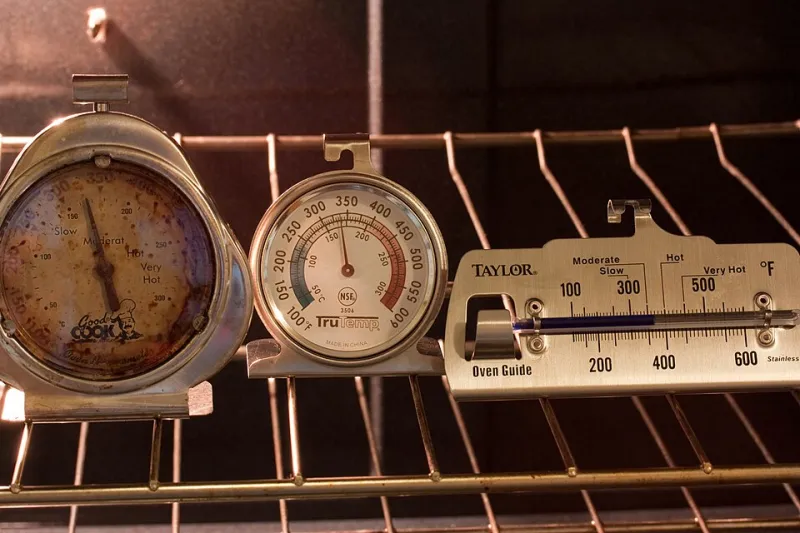
Photo: Veganbaking.net from USA, CC BY-SA 2.0, via Wikimedia Commons
I've blamed myself for a lot of baking failures. Flat cookies in July. Dense brioche in February. A banana bread that baked up gorgeous on Monday and sad on Wednesday. Turns out, some of that blame was misplaced — and a $12 thermometer proved it.
For one week, I kept a temperature diary. Ambient temp, butter feel, dough temperature before it hit the oven, and what my oven claimed versus what it actually did. Here's what seven days of honest numbers taught me.
Monday: The Oven Is a Liar
My oven dial says 350°F. My cheap oven thermometer, sitting on the center rack, said 322°F. Every bake I've made in this kitchen has run about 28 degrees cool — meaning I've been unconsciously adding time, drying out edges, and calling it "just how my oven is."
Fix: Buy an oven thermometer. Seriously. Set it on the rack, preheat for a full 20 minutes, and adjust your dial until the rack reads true, not the display.
Tuesday: Butter Has a Schedule, Not a Feeling
Recipe says "softened butter." My kitchen was at 68°F, and after an hour on the counter, the butter hit 64°F — perfect for creaming. On Thursday, the kitchen climbed to 76°F, and that same hour produced butter at 71°F: greasy, collapsing, ready to sabotage my cookie structure before I cracked an egg.
Fix: Stop timing butter by the clock. Aim for 65–67°F — it should give slightly when pressed but hold its shape. In summer, cut it cold and let the mixer do the softening.
Wednesday: Dough Remembers Everything
My pie dough came off the counter at 78°F. It was slack, sticky, and shrank in the oven like it was trying to escape. Two days later I chilled the same recipe's dough to 62°F before baking — flaky, tall, behaving.
Fix: Build in a "dough chill window." Twenty to thirty minutes in the fridge isn't a suggestion; it's the difference between structure and slump, especially when your kitchen runs warm.
Thursday Through Saturday: The Kitchen Is a Season
The biggest revelation wasn't any single number. It was that my kitchen isn't one environment — it's a moving target. Morning bakes ran 5 degrees cooler than afternoon ones. Running the dishwasher mid-bake added humidity that softened my meringue. Summer in this kitchen is a different recipe than winter, whether I admit it or not.
Simple seasonal swaps that helped:
- Warm months: cold butter, chilled flour, shorter rests.
- Cold months: slightly warmer liquid in yeast doughs, longer proofing near (not on) the oven.
- Humid days: reduce liquid by a tablespoon in cookie and cake batters, and don't skip the chill.
Stop Guessing, Start Measuring
Here's my takeaway, offered as a confession rather than a lecture: a lot of what I called "bad baking" was just unmeasured environment. Flour absorbs differently at different humidity. Butter behaves differently at different temperatures. Ovens drift.
You can't control the weather. You can control whether you know about it. Get one oven thermometer, one instant-read probe, and a notebook — or honestly, just the notes app on your phone. Track a week. I promise you'll catch your kitchen keeping secrets.
Your bakes aren't failing. They're responding. Learn the response, and you're suddenly the kind of baker whose cookies come out the same on Tuesday and Thursday. That's not luck. That's a diary.