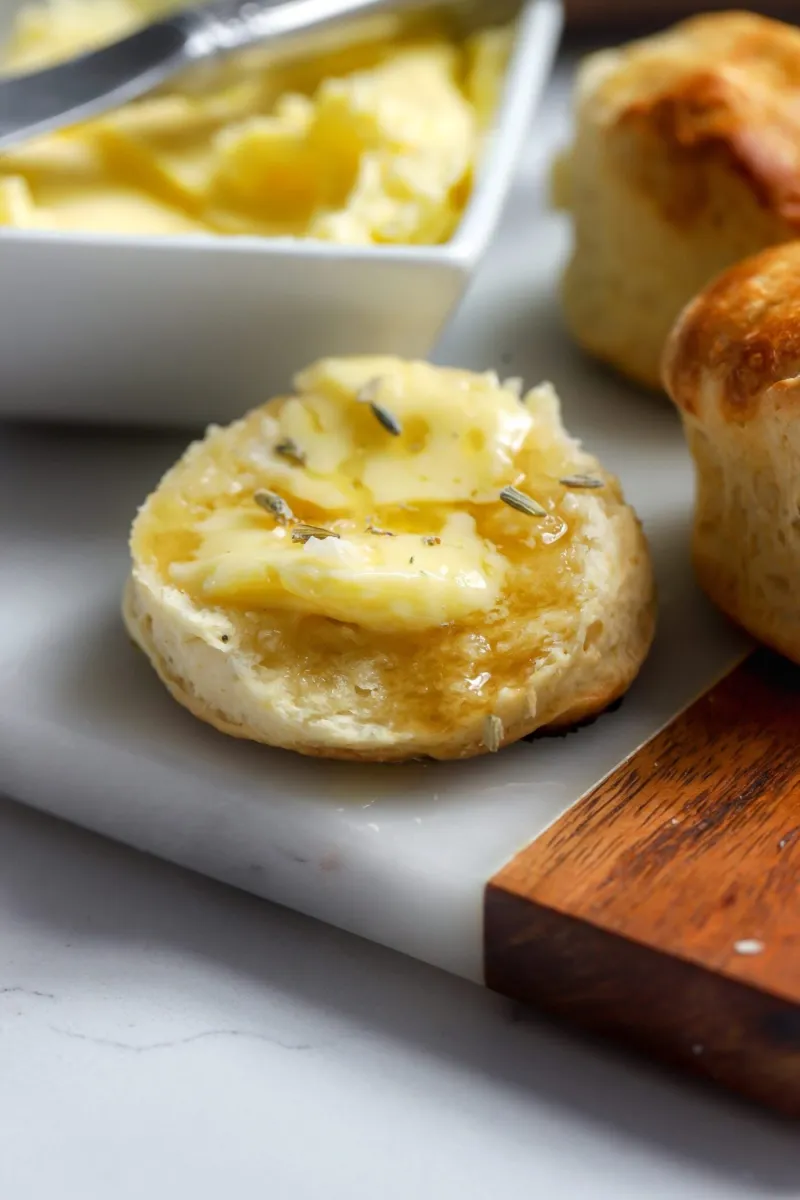
Your Sugar Isn't Too Sweet — Your Salt Is Too Shy

Photo: JJ Harrison ([email protected]) (tilt correction)., CC BY-SA 3.0, via Wikimedia Commons
Here's a scene we watch play out in our studio classes almost every weekend: a student tastes their cookie dough, frowns, and announces it needs more sugar. Nine times out of ten, what the dough actually needs is salt.
It's the most common overcorrection in home baking, and it makes sense when you think about why. Salt doesn't taste like much on its own, so when a bake tastes one-note sweet, our brains don't jump to the seasoning aisle. But salt is the amplifier in the room. It doesn't make things salty — it makes things taste like themselves.
The Ratio Nobody Talks About
Professional recipes don't really run on sugar. They run on the relationship between sugar and salt. And that relationship shifts dramatically depending on what you're baking.
A brioche-style enriched bread might carry a sugar-to-salt ratio of roughly 10:1. A classic American chocolate chip cookie lands closer to 15:1 or even 20:1. Custards? They're often down around 25:1 or 30:1, because the dairy and egg bring their own subtle savoriness to the party. Bread bakers, meanwhile, work almost in reverse — salt is a structural player there, tightening gluten and controlling yeast, not just a flavor note.
The problem is that most published recipes quietly absorb these ratios without ever explaining them. So when a home baker tweaks one, they often break the other.
The Overcorrection Loop
We call it the seesaw problem. Bake tastes flat? Add sugar. Now it tastes cloying. Add lemon or cut the sugar back. Now it's flat again. Round and round, when a quarter teaspoon of fine sea salt would have ended the cycle in one move.
There's a second version, too: bakers who read that "salt makes everything better" and start adding it indiscriminately. We've had brownies come through our test kitchen that tasted like the ocean at high tide. Salt has a ceiling. Past about 1.5% of the flour weight (or the total mix, in non-flour bakes), you stop amplifying and start seasoning — and not in a good way.
What the Pros Say: The Salt Budget
We asked a few pastry folks how they think about it, and one phrase came up again and again: the salt budget.
"Every recipe has a salt budget, and every ingredient spends some of it," one pastry chef told us. "Butter spends it. Vanilla extract spends it. Even chocolate spends it. If you swap in salted butter and keep the added salt, you've blown the budget before the oven's even hot."
Another point they all agreed on: when you add salt matters as much as how much. In custards and curds, salt dissolved into the warm base distributes invisibly. Sprinkled on top, it reads as a deliberate contrast — flaky, bright, almost crunchy. Neither is wrong, but they're different desserts.
A third theme: salt type is not a rounding error. A teaspoon of Diamond Crystal weighs roughly half of a teaspoon of Morton kosher. Swap them one-for-one and you've either doubled your salt or halved it. If a recipe just says "salt," assume table salt by weight — or better, get a scale.
Your Ratio Cheat Sheet
Print this, tape it inside your cabinet door, and stop guessing:
Chocolate Chip Cookies — Sugar to salt roughly 18:1. About 1/2 tsp fine salt per cup of sugar. Use 3/4 tsp if you want that salted-top finish.
Layer Cake & Buttercream — Around 20:1. One 1/4 tsp pinch per 2 cups of powdered sugar in frosting keeps it from tasting like birthday-card sweetness.
Enriched Bread (brioche, challah, dinner rolls) — Near 10:1. Salt here is structural; don't cut it to "reduce sodium" without expecting a denser crumb.
Custard & Pastry Cream — 25:1 to 30:1. A tiny pinch whisked into the warm dairy. You'll never taste it directly; you'll just notice the custard tastes more like custard.
Pie Dough — The sleeper. Salt to flour around 1.5–2%. Under-salted pie crust is why so many people think they don't like pie crust.
A Pinch, Measured
Salt and sugar are the yin and yang of the pastry kitchen — the studio is literally named after the partnership. Sugar brings the crowd; salt makes the crowd interesting. Get the ratio right for the bake in front of you, and you'll find yourself reaching for the sugar bowl a lot less often.
Your bakes probably aren't too sweet. They're just waiting for the other half of the duo to show up.