Twelve Weeks at a Folding Table: What My Farmers Market Spreadsheet Actually Says
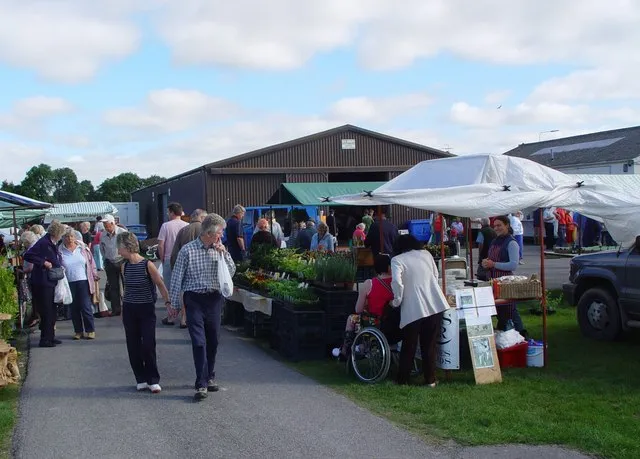
Photo: Peter Church, CC BY-SA 2.0, via Wikimedia Commons
There's a spreadsheet on my laptop called "market_final_FINAL_v3" and it is the least romantic document I own. Twelve rows, one per week. Columns for booth fees, ingredient costs, sales, leftovers, and hours worked. It is also the most honest thing I've ever written about baking.
This is that spreadsheet, turned inside out.
The Setup: Three Markets, One Station Wagon
I vendored at three regional markets over the summer — a Saturday morning market in a wealthy suburb, a Wednesday afternoon market downtown, and a small Sunday market at a farm about twenty minutes outside town. Same product line at each: sourdough loaves, focaccia by the quarter-sheet, and a rotating pastry I changed weekly to keep myself entertained.
Booth fees ran $35 to $55 per market depending on the venue. Over the season, those fees added up to $1,610 before I sold a single baguette. Add insurance, a canopy I bought in a panic the first week it rained, and the table linens I definitely didn't need but absolutely wanted, and my fixed costs crossed $2,200 by mid-July.
The Hour Nobody Prices
Here's the column that changed how I think about the word "artisanal": hours.
A Saturday market meant feeding my starter Thursday night, mixing and folding dough Friday between my day job's hours, shaping Friday night, baking from 2 a.m. Saturday, loading the car at 5:30, selling from 7 to noon, unloading by 1:30, and cleaning up until dinner. Call it fourteen hours for a good Saturday, sixteen for a bad one.
My best Saturday grossed $612. My worst grossed $184. The season average, across all twelve weeks and three markets, was $394 per market day. Divide by fourteen hours and you get $28 an hour — before ingredients, before fees, before the gas station breakfast that became a regrettable tradition.
After actual costs? On a good week, I cleared about $19 an hour. On a bad week, I paid for the privilege of standing in the rain handing out samples.
The Leftover Ledger
Unsold bread is the part of the farmers market dream nobody photographs. My waste rate settled around 11% — eleven cents of every ingredient dollar walked back into my kitchen at 1 p.m.
I tried everything. Discounting in the last hour barely moved the needle and trained my regulars to wait. Donating to the church two blocks over felt right and cost me a tax deduction worth roughly nothing at my income. The real fix was unglamorous: I cut bake quantities by 15% in week six and started selling out of the focaccia by 10:30, which turned out to be the best marketing money can't buy. Scarcity, it turns out, is a flavor.
What "Artisanal" Pricing Actually Means at 7 A.M.
My sourdough was priced at $9 a loaf. People said "nine dollars?" often enough that I kept a tally out of spite: the final count was 31. The same loaf sold out every week at the suburban market and moved slowly downtown, which taught me more about pricing than any formula: price is a conversation between your costs and your customer's Saturday, and you only control half of it.
When I worked backward from a realistic wage — say, $25 an hour after costs — my loaf needed to be $12. I never got there. Maybe next season I will, or maybe the honest answer is that a folding table is a marketing channel wearing a cash box, and the bread that pays the rent comes from somewhere else entirely.
The Verdict, in Four Numbers
- $4,728 gross sales for the season
- $2,981 in total costs, fees, and ingredients
- 168 hours of work, roughly
- $10.40 effective hourly wage, and I'd do it again tomorrow
Because here's the thing the spreadsheet can't capture: the regular who brought me tomatoes from her plot, the kid who spent a whole dollar on a heel of focaccia and beamed about it, the restaurant chef who bought my last three loaves and asked for a wholesale sheet. The ledger says I lost money on margin. The ledger doesn't say I found my first customer for next year.
Track everything. Price honestly. Bring a rain canopy. And when someone winces at nine dollars, smile and hand them a sample — the spreadsheet will remember so you don't have to.