Your Oven Is Lying to You (I Put a $12 Thermometer on Trial)
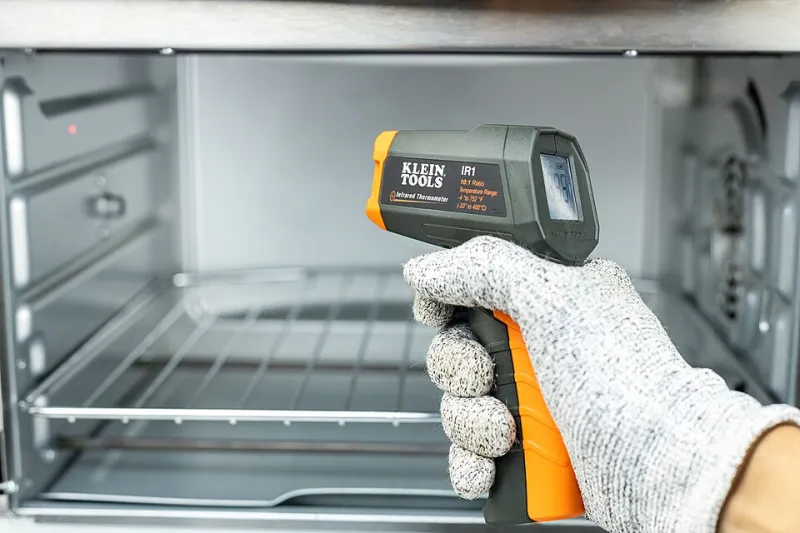
Photo: Luna Regina, CC BY-SA 4.0, via Wikimedia Commons
Somewhere in America right now, a batch of chocolate chip cookies is burning on one side while staying pale on the other, and the baker is blaming herself. She shouldn't. Her oven is lying to her — and it's been lying to all of us for decades.
Here at the studio, we finally got tired of shrugging at the problem, so we ran a little experiment. Three ovens. One $12 dial thermometer (plus a pricier digital probe as our fact-checker). Two weeks of logging. What we found would make anyone who's ever followed a recipe's timing to the letter feel a whole lot better.
The Dial Is a Suggestion, Written Poorly
Oven dial 1: a mid-range electric range, maybe eight years old. Set to 350°F, it cycled between 312°F and 391°F. Not a typo. That's a 79-degree swing, happening in waves every ten minutes or so as the heating element kicked on and off.
Oven 2: a gas oven, set to 350°F, which settled — eventually — around 335°F. It also ran about 15 degrees cold on average, meaning every bake was quietly underperforming while the recipe's timing got blamed.
Oven 3, a newer convection model, was the star of the show: a mere 20-degree swing, and it hovered close to its setpoint. Newer ovens with better thermostats and convection fans simply behave. If you're shopping for a range anytime soon, that's worth more than a third rack.
The takeaway from all three: the number on the dial is where your oven starts, not where it lives.
Map Your Own Hot Spots
Want to know what your oven is actually doing? Here's the cheap, slightly nerdy version of what we did:
- Buy a basic oven thermometer. The $10–15 dial kind is fine. Place it on the center rack, front edge.
- Preheat 20 minutes past the beep. Most ovens announce 350°F before they're actually there. Ours needed an extra 15–20 minutes to stabilize.
- Log the readings every 5 minutes for 30 minutes. Note the highs and the lows.
- Then move the thermometer around. Back-left, back-right, front-center, top rack, bottom rack. Do a simple bake — a sheet of sugar cookies works great — and note which side browns first.
Yes, this is an hour of your life. It's also the single most useful hour you'll spend on your baking this year, because you'll come away with an actual map instead of a guess.
The Fixes That Actually Work
Once you know your oven's personality, you can work with it:
- Calibrate or compensate. Many ovens let you adjust the dial offset (check your manual — most allow ±25–35°F tweaks). If yours doesn't, just set the dial 25 degrees high or low to hit your true target.
- Rack position is a flavor dial. Too dark on the bottom? Raise the rack. Pale tops? Drop it down or finish with the broiler for 60 seconds — standing there, watching, the whole time.
- Rotate religiously. If your oven runs hot at the back (most do, because that's where the heating element hides), rotate pans at the two-thirds mark. It feels fussy. It's what bakeries do.
- A baking stone or steel is a shock absorber. Parked on a rack, it moderates the temperature swings and evens out the hot spots. Ours knocked the peaks off that 79-degree swing considerably.
- Ignore timing; watch color. This is the big one. When a recipe says "12–14 minutes," that's an estimate written in someone else's oven. Bake to visual cues — golden edges, a toothpick with moist crumbs — and your bakes will improve immediately.
Why Recipes Rarely Match Your Reality
Recipe developers test in calibrated ovens, often professional ones, in controlled conditions. Your oven — with its wobbly thermostat, its drafty door seal, and its mysterious cold zone in the back-left corner — is not that oven. This isn't a flaw in the recipe or in you. It's just physics plus a dial that was never telling the truth.
So the next time a bake comes out uneven or a cake sinks in the middle, don't reach for self-blame. Reach for a thermometer. Your oven has been keeping secrets for years. It's time you found out what they are.
One pinch of curiosity, one cheap thermometer — that's the whole kit. Happy mapping.