Six Dozen Cookies and a Dream: Inside the Wedding Cookie Table Economy
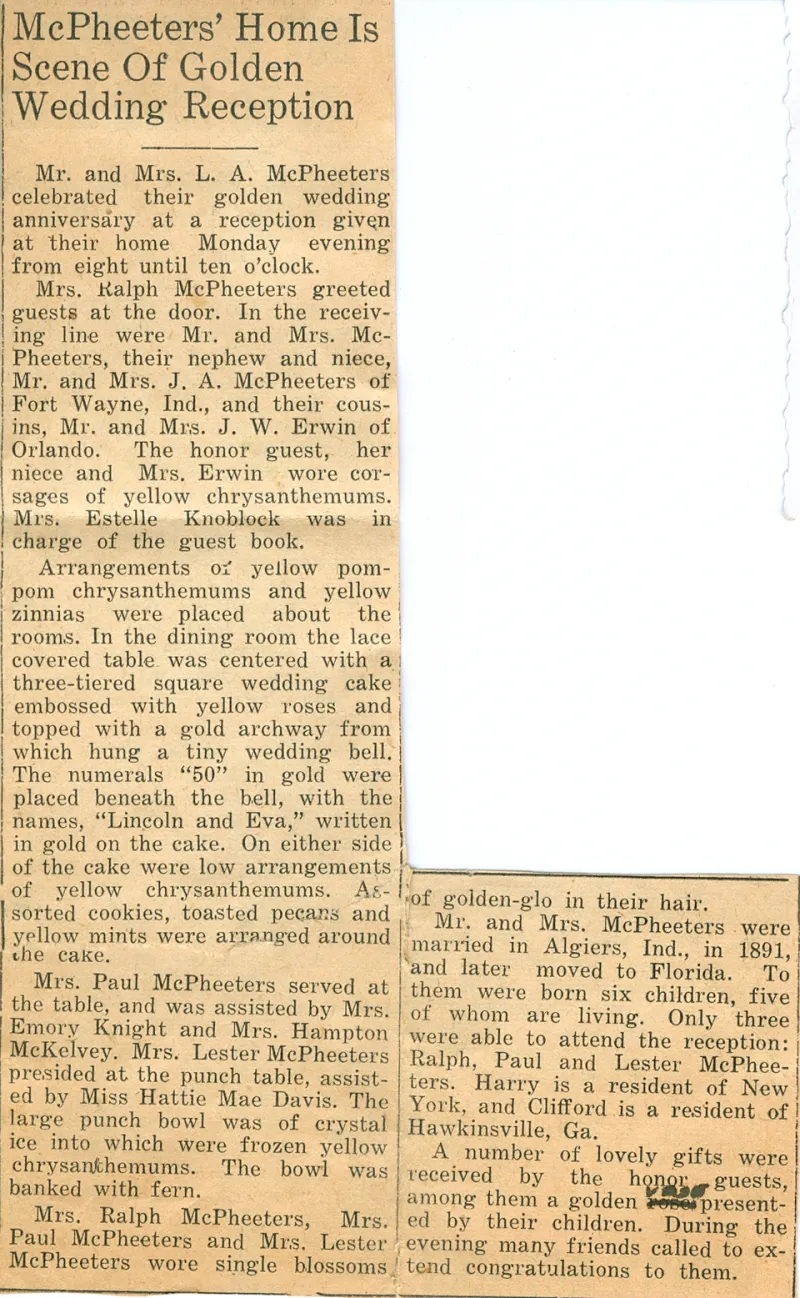
Photo: AnonymousUnknown author, Public domain, via Wikimedia Commons
If you've never been to a wedding in Western Pennsylvania, the cookie table might sound like a rumor. It is not. It's a long banquet table, usually stationed near the dance floor, groaning under six to twelve thousand cookies — made not by a caterer, but by aunts, grandmothers, cousins, and increasingly, by hired home bakers who get paid by the dozen.
The tradition traces back to Italian, Greek, and Slovak immigrants who arrived in Pittsburgh's steel towns a century ago. A wedding wasn't a wedding unless the community showed up bearing sweets — anginetti, pizzelle, kolaczki, polvorones. The cookie table was the potluck's answer to the question every bride's family faced: how do you feed two hundred guests on a mill worker's salary? You don't. Your neighborhood does.
What's happened over the past decade is the interesting part. That tradition of obligation has turned into an economy.
From Family Recipe to Order Book
Maria Delgado, 41, baked her first paid wedding order in 2019 — a favor for her cousin's coworker in Youngstown, Ohio. "I made 2,400 polvorones and thought my arms were going to fall off," she told me over the phone, while a batch of dough chilled in her kitchen. "But when she paid me, I sat down and did the math. I'd been giving these cookies away my whole life."
Maria isn't alone. Facebook groups for Pittsburgh-area wedding bakers have swelled into the thousands, and home bakers from Cleveland to Columbus now advertise "cookie table packages" — 300 to 5,000 cookies, priced per dozen, delivered in catering trays.
Here's where the Baking Science nerd in me gets excited, because a cookie table is essentially a stress test for recipe engineering. You need cookies that:
- Survive a week of advance baking. Nobody is baking 3,000 cookies the night before. Shortbread, Russian tea cakes, and pizzelle all hold beautifully for 7–10 days in airtight tins.
- Skip the refrigeration requirement. Wedding venues have limited fridge space, and buttercream-laden cookies sweat.
- Withstand transport without cracking. That's why you'll see delicate tuiles skipped and sturdy thumbprints everywhere.
- Ship at room temperature without going stale. High-sugar, low-moisture doughs have lower water activity — which is the actual scientific reason grandma's wedding cookies taste fine on day six.
It turns out the immigrant grandmothers who built this tradition were accidental food scientists. They selected for durability, sugar, and fat because those were the ingredients they had — and those are precisely the variables that make cookies shelf-stable.
The Math Nobody Shows You
Let's do what we did with our croissant audit, but for a cookie table order. Say a bride hires you for 1,200 cookies — 100 dozen — a mid-size order.
Ingredients: At roughly $0.28 per cookie in butter, flour, sugar, nuts, and extract (using quality butter, not the bargain block), that's about $336. Labor: Even at a fast pace, figure 4 minutes per dozen including mixing, baking, and cooling — roughly 7 hours of active work, plus a full day of dough prep. If you value your time at $20/hour, you're at another $200+. Packaging and transport: trays, liners, and gas, maybe $60.
That's a real cost of roughly $600 — which is why the going rate of $8–$12 per dozen leaves almost no margin. Bakers who survive this business don't compete on price. They compete on reputation, and they charge for it. Maria now charges $14 a dozen and has a waitlist.
The Licensing Hurdle Nobody Mentions
Then there's the paperwork. Most of these bakers operate under cottage food laws, which vary wildly by state. Pennsylvania's law is generous — non-potentially-hazardous baked goods, sold directly to consumers, no license needed. Ohio requires a home bakery license if you exceed certain gross sales. Some states cap your annual revenue at levels a serious cookie table operation blows through by March.
And there's a wrinkle: a wedding is often a third party buying the food. Some state health departments interpret that as wholesale, which kicks you out of cottage food territory entirely. Smart bakers solve it with a workaround — the couple pays, but the contract names the couple as the consumer hosting a private event. It's the kind of legal gray area that would make your grandmother laugh, then keep rolling dough.
The Pipeline: Polvorones to Pizzelle
What struck me most talking to these bakers is how the tradition self-propagates. A bride who grew up with a cookie table at her cousin's wedding wants one at hers. She hires a baker. That baker teaches her niece. The niece starts a business. It's the polvorones-to-pizzelle pipeline — recipes migrating across family lines, gaining a price tag, losing none of their soul.
There's something quietly radical about it, too. In an era of $90 plated chicken and wedding industry markups, the cookie table remains stubbornly handmade. Thousands of individual cookies, each rolled by someone's hands, each one a small argument that abundance is a form of love.
Maria put it better than I could: "A cake says 'look at us.' The cookie table says 'everybody eat, everybody's family tonight.'"
Just make sure the baker charging for it has done the math. One pinch at a time — but a few thousand at a time.